









Using the Christmas generator

Type a line and it comes out in blackletter, the lettering of old carol sheets and shop signs in the snow. Style switches to cursive for something softer, or bold, double-struck and a few others, and the result pastes into a card design, an Instagram caption or the family group chat as it is.
It isn't a font you install. Each letter is swapped for a Unicode character that already looks that way, so it keeps its shape wherever you paste it. The codes further down work the same way, except Pigpen, which is drawn as a picture because Unicode has no Pigpen letters.
For cards, tags and the advent calendar





Ideas for the season

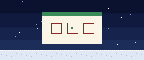
Gift tags. Write each name in script and print a sheet of them. Or write the name in Pigpen instead, tape the key inside the wrapping paper, and the present has to be half opened before anyone knows whose it is.
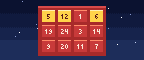
An advent calendar with a message. Pick a sentence of 24 letters, one for each door from 1 to 24, and put each letter behind its door as an A1Z26 number. By Christmas Eve the whole message is there, and nobody could read it early by peeking at one door.
A treasure hunt on Christmas morning. Leave each clue in a different code, Morse on one and Pigpen on the next, with the last one leading to the present that was too big to wrap.
Why Xmas has an X

The X in Xmas isn't a crossing out. It's the Greek letter chi, which looks like an X and is the first letter of Christos, the Greek for Christ. Writers in English have used it that way for centuries: the Anglo-Saxon Chronicle has Xp̄es mæsse around 1021, and Xmas itself turns up in writing by 1721.
Some well-known writers used it without a second thought. Samuel Taylor Coleridge wrote it in 1801, Lord Byron in 1811 and Lewis Carroll in 1864.
The first Christmas card

The first Christmas cards sold in shops were commissioned by Henry Cole and drawn by John Callcott Horsley in London in 1843. Two print runs came to 2,050 cards, sold for a shilling each.
The picture showed three generations of a family raising a glass to whoever got the card, with scenes of food and clothes being given to the poor on either side. The family drinking wine together is said to have caused some disapproval. The timing was shrewd, though: Cole had helped bring in the Penny Post three years earlier, so sending a card to everyone you knew had just become cheap.
Questions

Is this a real font I can install?
No. It writes Unicode characters that are shaped like blackletter or script, so there's nothing to install and the letters paste anywhere text goes. A design app that uses its own fonts may not have every one of them, so check the result before you print.
Which style looks most like Christmas?
Blackletter for a card front or a carol sheet, and cursive for names on tags. Bubble text works for anything aimed at children.
Can children decode these?
Pigpen, A1Z26 and Morse are all simple enough for primary school, and each has a printable chart on its page. Print the chart once and keep it with the wrapping paper.
Will Christmas letters work in an Instagram bio?
Yes. They're characters, not formatting, so Instagram, TikTok and WhatsApp show them as long as the phone reading them has a font for them. Screen readers may read them letter by letter, so keep anything important in plain text too.