


What this is, and what it isn't
American Sign Language is a language. It has its own grammar, its own word order and its own way of using space and the face to carry meaning, and it is not English with the sound turned off. Fingerspelling is one part of it, used for names, for brands, and for a word a signer wants to quote in English exactly.
So this page spells. Type a sentence and you get that sentence spelled letter by letter, which is not how anyone would sign it. No tool that swaps one alphabet for another is translating anything, and this one says so where it might actually mislead someone.
It also won't teach you to sign. Handshapes are only part of it, and the rest is movement, position and timing that a diagram can't hold. Lifeprint, run by Dr Bill Vicars, is a free course and the place to go next.
Using the tool
Type on the left and the hands are drawn on the right. Spaces break the spelling into words, and anything that isn't a letter is dropped rather than guessed at.
Download saves the result as an SVG, which stays sharp at any size, so a spelled-out name prints as happily as it sits in a slide. This conversion only runs one way. There's nothing to type back in.
Print chart, under the chart itself, prints the 26 handshapes on their own sheet for a classroom wall, with the address and a code to scan underneath.
The sign language alphabet chart
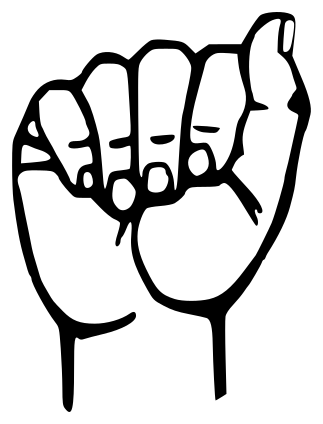 A
A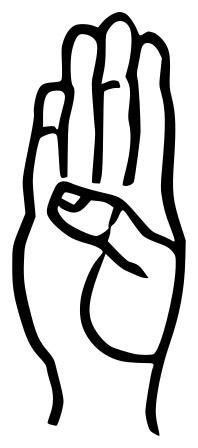 B
B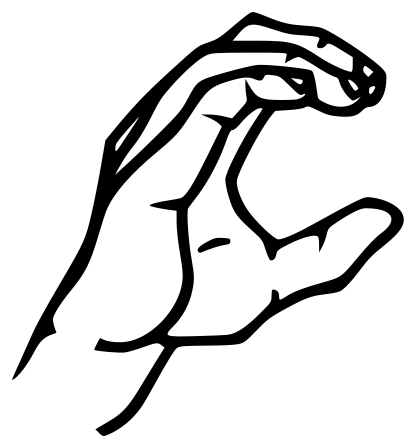 C
C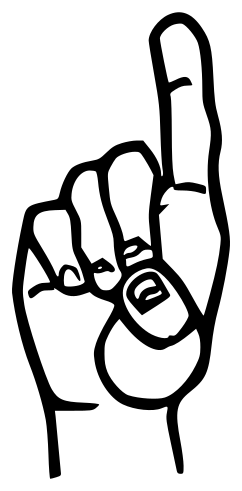 D
D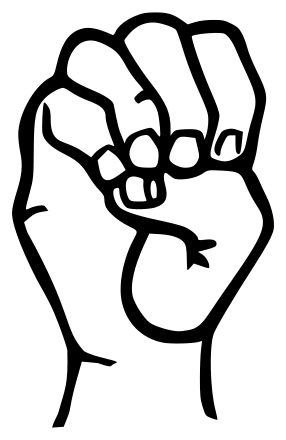 E
E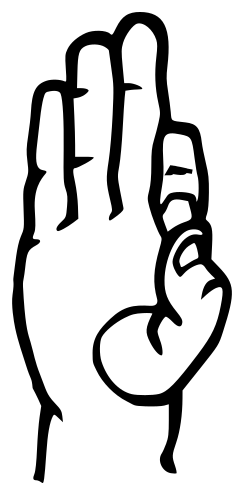 F
F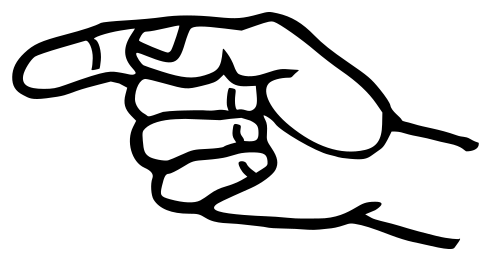 G
G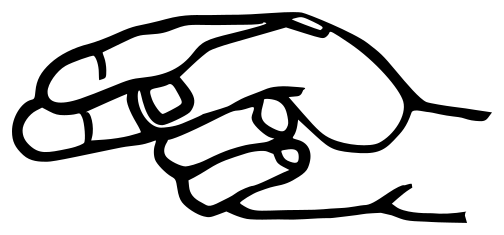 H
H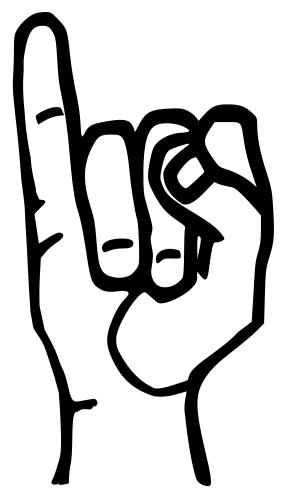 I
I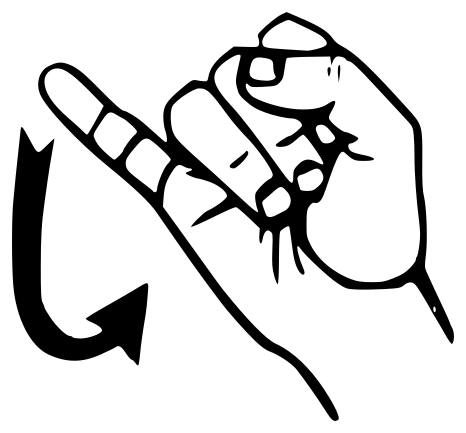 J
J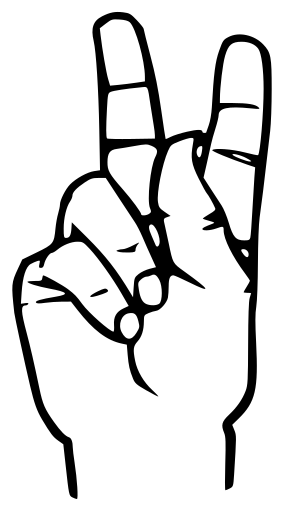 K
K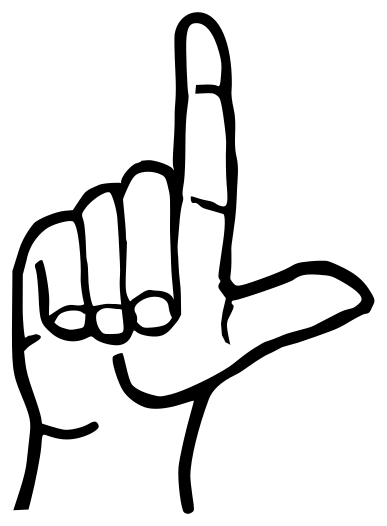 L
L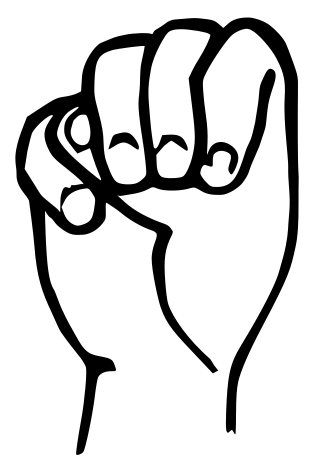 M
M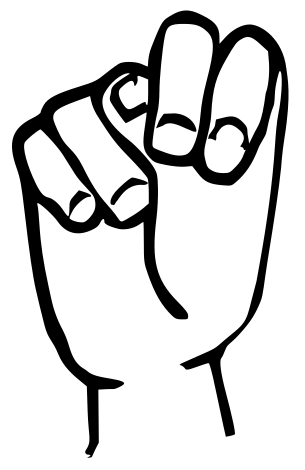 N
N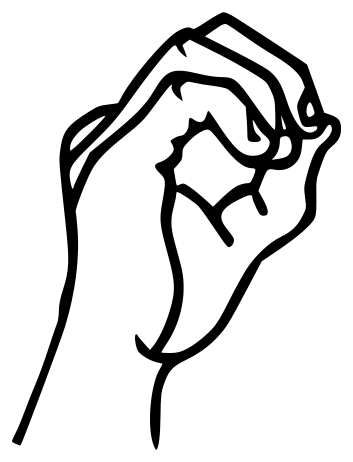 O
O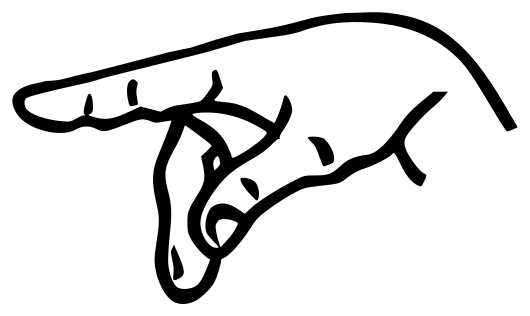 P
P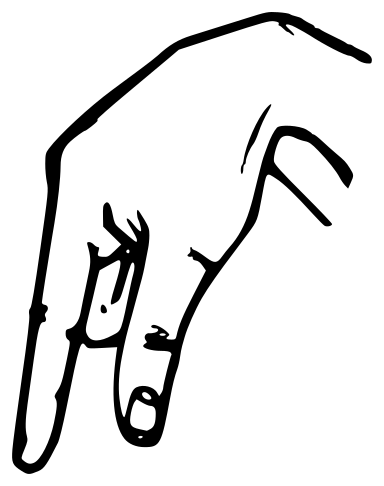 Q
Q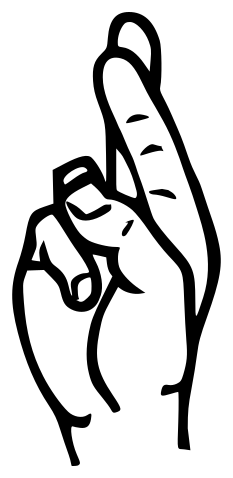 R
R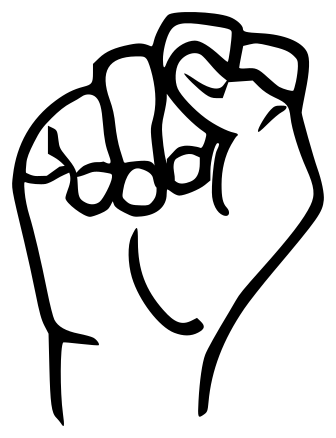 S
S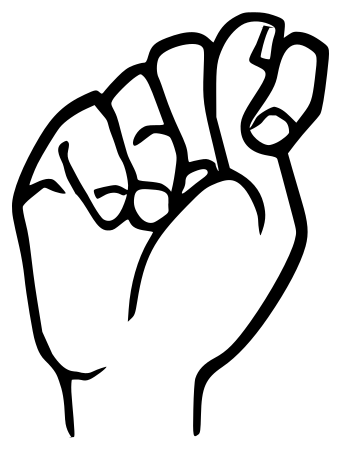 T
T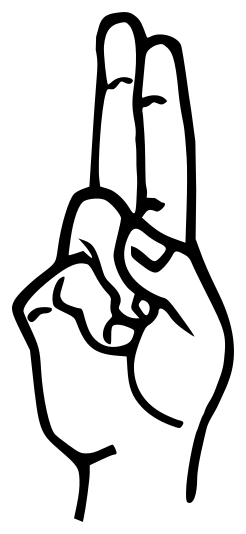 U
U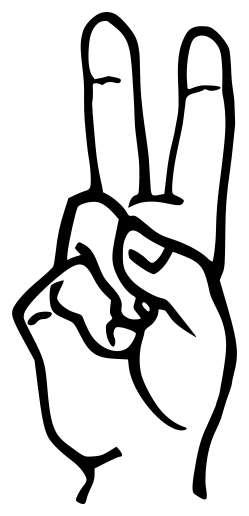 V
V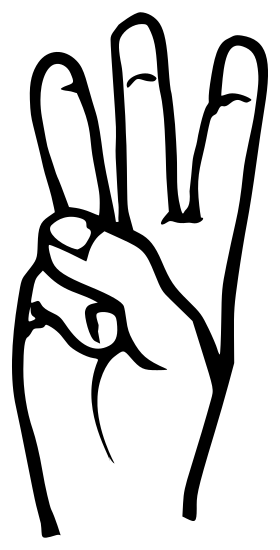 W
W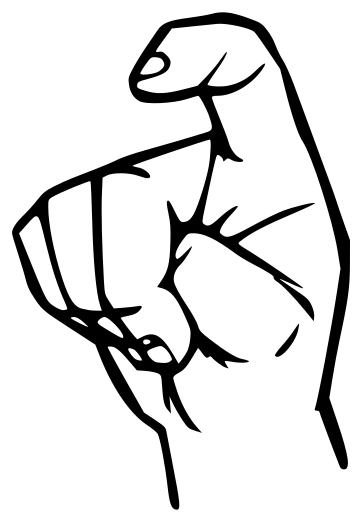 X
X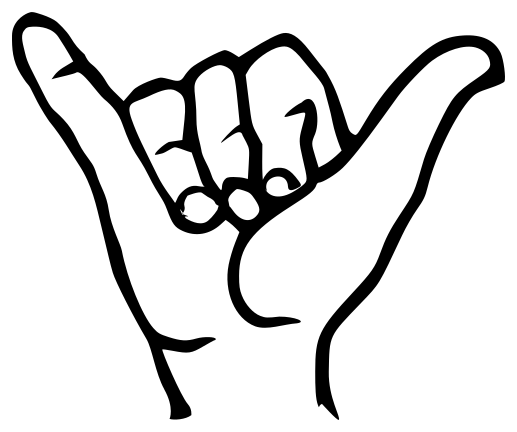 Y
Y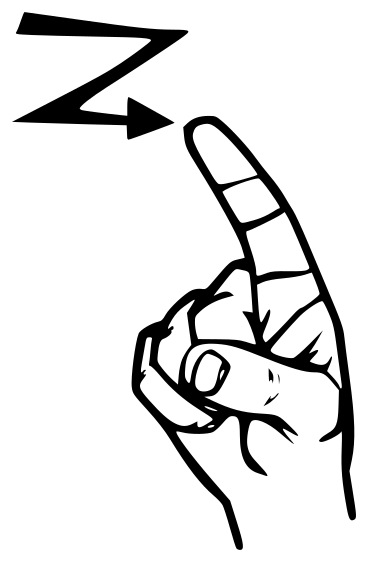 Z
ZThe sign language alphabet chartstringmash.com/fingerspelling-alphabet
How to read the chart
These are right hands with the palm towards you, which is how you'd see someone else spelling. Hold your own right hand up to a mirror and the thumb lands where it does here.
J and Z carry arrows, because they are movements rather than poses. J is the I handshape drawing a J in the air, and Z is an index finger cutting the letter. The arrow shows the path; a still picture can only show where it starts.
M, N, S and T are the four that beginners mix up. All four are a closed fist, and the difference is entirely where the thumb goes: across the front for S, tucked under three fingers for M, under two for N, and poking up between the first two for T.
The drawings come from a public domain set by wpclipart.com, by way of Wikimedia Commons. They replaced a set drawn here from memory, which had the wrong shape for six letters. A chart people print has to be right, and remembering is not the same as knowing.
It came over on a boat in 1816
Thomas Hopkins Gallaudet went to Europe looking for a method to teach a deaf neighbour's daughter in Connecticut. He was turned away in Britain, where the schools guarded their methods, and found what he needed in Paris instead.
He came home with Laurent Clerc, a deaf teacher from the Paris institute, who spent the 52-day crossing teaching Gallaudet to sign. They opened the American School for the Deaf in Hartford in April 1817, and Clerc taught there for decades.
The manual alphabet came with him, which is why the American one is so close to the French one and so unlike the two-handed alphabet used in Britain. Two countries that share a spoken language spell with different hands.
Related conversions
Pigpen is the other conversion here that comes out as a drawing, for the same reason: Unicode has no characters for it, so the page draws the symbols instead of printing them. Morse is the other alphabet on this site built for spelling a name out to someone at a distance.
For writing systems rather than spelling systems, there's Ogham and Elder Futhark.
Questions
Is this a sign language translator?
No. It spells English words letter by letter in the American manual alphabet. ASL has its own grammar, and a sentence signed properly looks nothing like its English spelling.
Why do J and Z look different from the rest?
They are the two letters made by moving the hand rather than holding a shape, so their drawings carry an arrow. The arrow is the path the hand takes; the hand shown is where the movement begins.
Is the manual alphabet the same everywhere?
No. This is the American one, which descends from the French alphabet Laurent Clerc brought to Hartford in 1816. British Sign Language uses a two-handed alphabet that shares almost nothing with it.
Can I print the chart?
Yes. Print chart, under the chart, puts the 26 handshapes on a sheet of their own with the address and a QR code under them. A spelled-out name downloads separately as an SVG, so it stays sharp however large you print it.
Where should I learn properly?
From Deaf teachers. Lifeprint is a free course online, and a local class or Deaf community group will get you further than any chart.